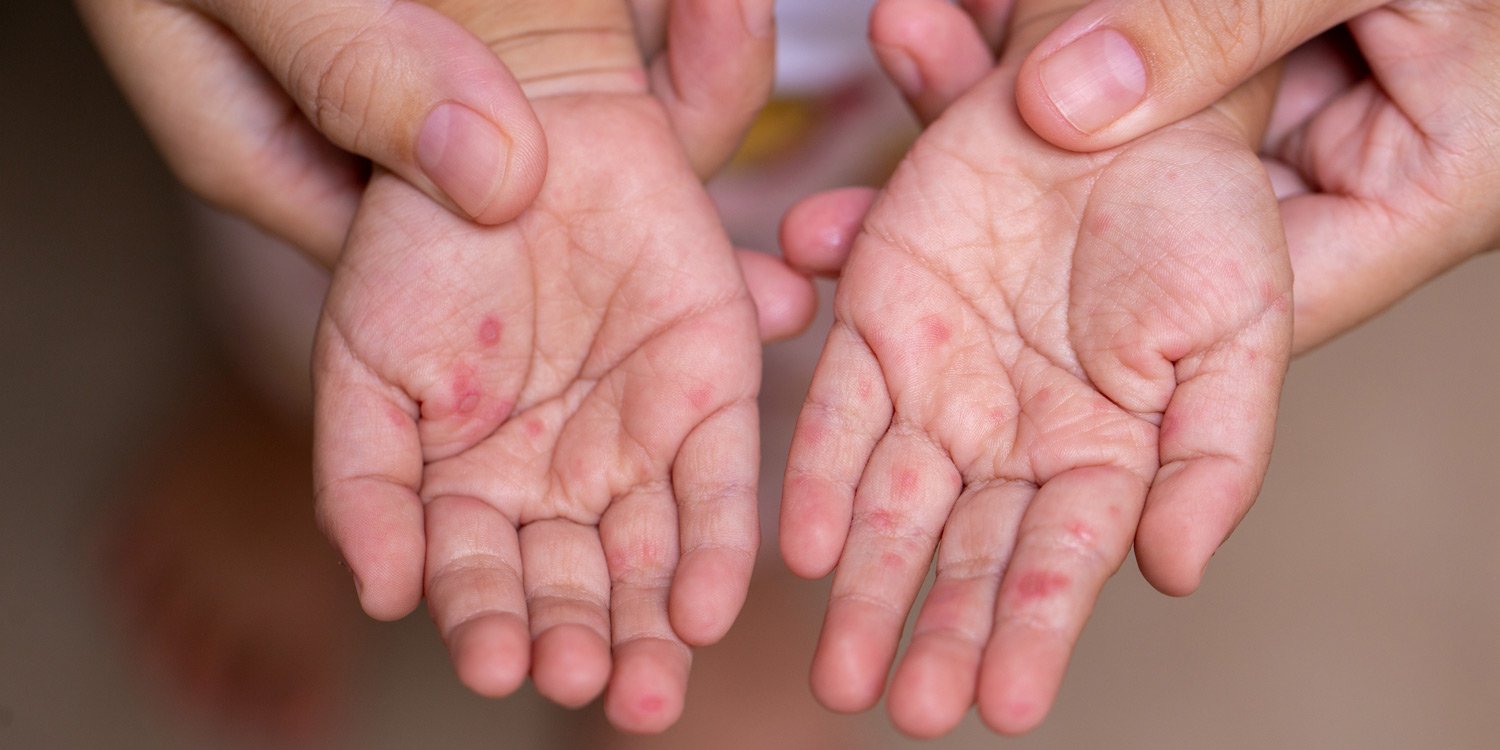
Hand-foot-and-mouth disease Hand-foot-and-mouth disease is a mild, yet highly contagious viral infection commonly found infants and children, particularly those younger than five years. However, it may affect older children, adolescents, and adults. It is characterized by sores in the mouth and a rash on the hands and feet, which may also appear on other body parts.
How is hand, foot, and mouth disease spread?
The disease is typically transmitted through several primary routes:
- Contact with Virus-Infected Feces (Fecal-oral Route): This is one of the most common modes of transmission, especially among children who are not fully toilet trained. Virus particles can be present in the stool of infected individuals, and the virus can spread if hands are not thoroughly washed after using the toilet or changing a diaper.
- Respiratory Droplets: The virus can spread through close personal contact, such as the saliva of an infected person. This occurs when an infected person coughs or sneezes, propelling droplets a short distance, or by sharing cups or eating utensils with an infected person.
- Contact with Blister Fluid: The virus can also be spread by direct contact with the fluid from blisters or sores caused by the disease.
- Contact with Contaminated Objects and Surfaces: The virus can survive on objects and surfaces, such as toys, doorknobs, and tabletops. Touching these contaminated surfaces and then touching the face, particularly the mouth, nose, or eyes, can lead to infection.
Incubation Period:
The incubation period is approximately 3-5 days.
Infectivity Period:
Individuals are most contagious during the first week after symptom onset. However, the virus can remain in the body and continue to be shed through the stool for several weeks after the symptoms have resolved. This prolonged shedding means that maintaining good hygiene is crucial for several weeks following infection to prevent spreading the virus to others.
Symptoms:
Hand-foot-and-mouth disease typically presents with:
- Mouth or Throat Pain: Verbal children may complain of pain, while nonverbal children may refuse to eat. These complaints are due to painful, blister-like lesions on the tongue, gums, and inside of the cheeks, leading to drooling and decreased oral intake.
- Skin Rash: This includes spots, bumps, or blisters, typically on the hands, feet, buttocks, legs, and arms. The rash is not itchy and usually resolves in 3-4 days.
- Fever: If present, it generally remains below 38.3°C (101°F).
- Prodromal Symptoms: These are usually absent. When reported, they may include fever, fussiness, abdominal pain, vomiting, and diarrhoea.


Prevention:
The viruses that cause hand, foot, and mouth disease are highly contagious. The viruses that cause HFMD can be spread by children without symptoms and children whose symptoms have resolved. You can slow or stop the spread of the illness through the following good hygiene steps:
- Wash hands with soap and water (especially nursery workers and children) for at least 20 seconds, and if soap and water are not available, use hand sanitizer that contains alcohol. Especially after changing diapers, after using the toilet, after coughing or sneezing, and before and after caring for someone who is sick.
- Assist young children with handwashing.
- Adhere to strict hand hygiene in childcare, especially after diaper changes.
- Maintain good environmental hygiene.
- Avoid sharing eating utensils, cups, towels, blankets, or clothing.
- Regularly clean and disinfect frequently touched surfaces such as furniture, toys, and commonly shared items.
- Clean surfaces contaminated with oral secretions or feces.
- Exclude children from school or day care if feverish or unwell.
- Keep children home if they have open sores or excessive drooling.
- Use absorbent disposable towels to wipe away obvious contaminants such as respiratory secretions, vomitus, or excreta, and then disinfect the surface and neighbouring areas.
- Cough and/or sneeze into tissue/ your elbow.
- Avoid group activities when an HFMD outbreak occurs in a school or nursery.
When to Seek Medical Advice?
Seek medical advice if your child displays any of the following:
- Signs of infected sores, such as swelling, redness, warmth, pain upon touching, or discharge that is yellow, green, or bloody, accompanied by a foul odour.
- Significant difficulty eating or drinking.
- Infrequent urination:
- For babies and young children, contact a doctor if they haven’t had a wet diaper within 4 to 6 hours.
- For older children, call if they have not urinated for 6 to 8 hours while awake.
- If your child’s condition does not improve after 2 to 3 days, or if symptoms worsen.