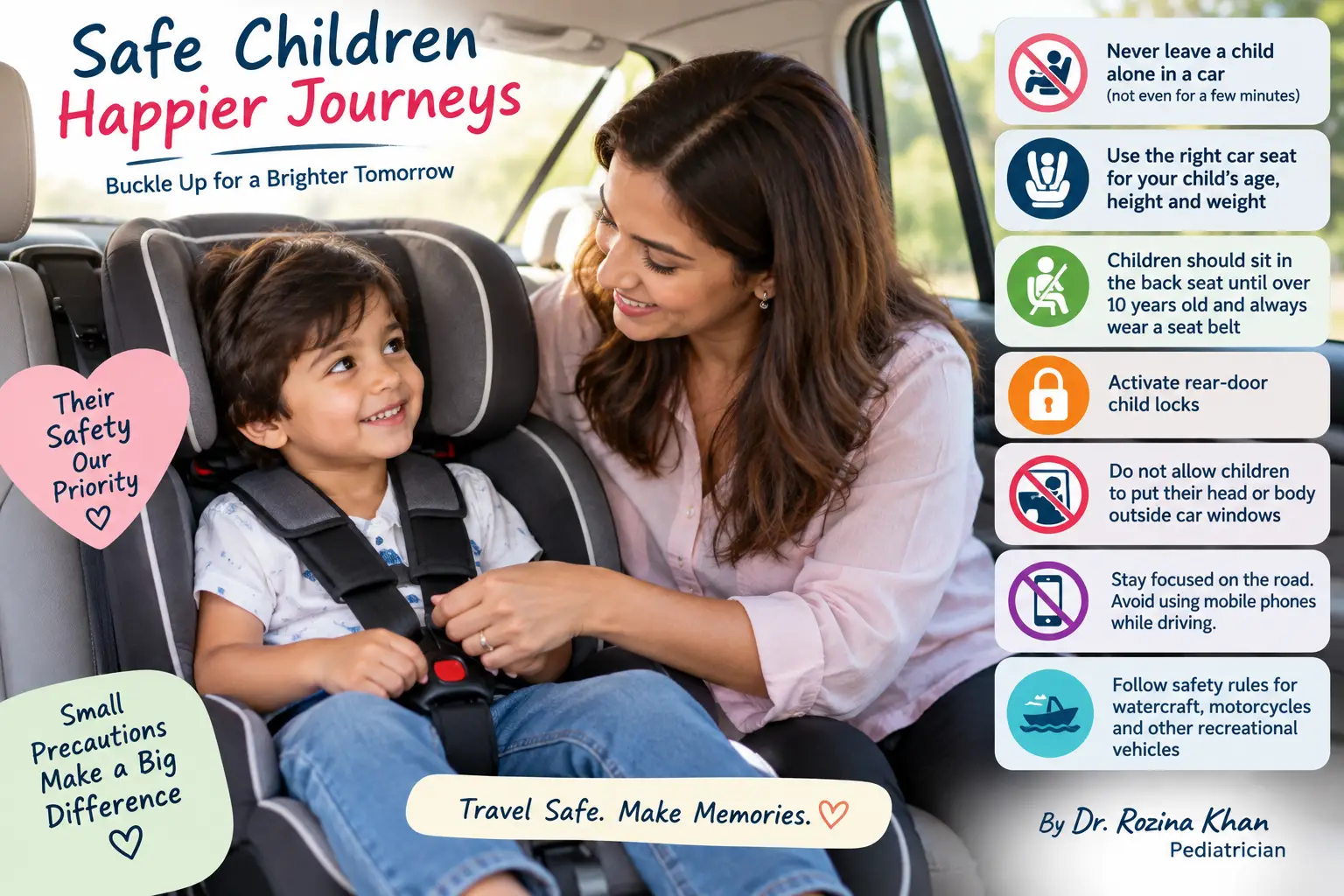
Every journey with a child—whether it is a short drive to school or a longer family trip—comes with an important responsibility: keeping our children safe.
Unfortunately, children can be seriously injured in vehicle-related accidents that may have been preventable. As parents and caregivers, understanding basic vehicle safety precautions and following them consistently can make an enormous difference.
Never Leave a Child Alone in a Car
One of the most important rules is simple:
Never leave a child alone inside a vehicle, even for a few minutes.
This is particularly dangerous during hot weather. A parent may think, “My child is sleeping, I will only be gone for a minute,” or believe that leaving the air conditioning running makes the situation safe.
Children should never be left unattended in a vehicle. Heat-related illness can become serious and potentially life-threatening.
Use the Right Car Seat for Your Child
A properly selected child car seat provides important protection in the event of a collision.
Choose a car seat or child restraint appropriate for your child’s:
Age • Height • Weight
The source emphasizes that using an appropriate child car seat increases safety and can reduce the harm a child may experience during an accident.
Parents should also make sure that the seat is correctly installed and that the child is properly secured before every journey.
The Back Seat Is the Safer Place for Children
The original guidance specifically highlights the importance of children travelling in the rear seats with appropriate restraints and cites Kuwait’s Child Rights Law regarding children under 10 years of age.
Parents should always follow current local traffic laws and use an age-, height- and weight-appropriate child restraint.
Most importantly, make buckling up a habit from the very beginning.
No matter how short the journey is, secure your child before the car starts moving.
Activate the Rear-Door Child Safety Locks
Children are naturally curious. A young child may try to pull a door handle without understanding the danger.
Use your vehicle’s rear-door child safety locks so that children cannot accidentally open a door from inside the car.
It takes only a few seconds to check the locks before travelling.
Never Let Children Put Their Head or Body Out of the Window
Children may enjoy feeling the wind through an open window or sunroof, but allowing them to put their head or upper body outside a moving vehicle can expose them to serious injury.
The guidance specifically warns parents not to allow children to put their heads out of side windows or roof openings while the vehicle is moving.
Teach children that they should remain properly seated and restrained throughout the journey.
Parents Must Set the Example
Children learn road-safety behaviour by watching adults.
Drivers should remain focused on the road, avoid being distracted by mobile phones and follow traffic regulations—particularly when children are travelling with them.
When children see their parents fastening their seat belts, following traffic rules and avoiding phones while driving, these behaviours gradually become normal habits for them too.
Safety Around Watercraft and Recreational Vehicles
Child safety extends beyond the family car.
The source also addresses marine vehicles, motorcycles and recreational aviation activities. It highlights age restrictions under Kuwait’s Child Rights Law and stresses appropriate supervision and safety precautions. For water activities, it specifically mentions swimming ability, adult responsibility and the importance of wearing a life jacket.
Parents should always check the applicable safety regulations before allowing children to participate in these activities.
A Simple Safety Checklist Before You Drive
Before starting the car, take a few seconds to ask yourself:
✓ Is my child in the appropriate car seat or restraint?
✓ Is the seat properly secured?
✓ Is my child correctly buckled?
✓ Are the rear child-safety locks activated when needed?
✓ Are the windows and sunroof being used safely?
✓ Have I put my phone away so I can concentrate on driving?
✓ Have I made sure no child will be left unattended in the vehicle?
These simple checks can become part of your family’s everyday routine.
A Message from Dr. Rozina
As parents, we cannot prevent every accident—but we can reduce many avoidable risks.
Safety rules are not there to make family life difficult. They exist to protect children before something goes wrong. The original child-safety guidance makes the same important point: following safety instructions and respecting the law can help protect children from preventable accidents while teaching them the importance of protecting themselves.
Before every journey: check the car seat, buckle up, put the phone away, and make sure your child is safe.
Sometimes the smallest safety habit can prevent the biggest tragedy.
Dr. Rozina Khan
Pediatrician | General Pediatrics | Child Development | Autism & ADHD Assessments